July 22, 2026
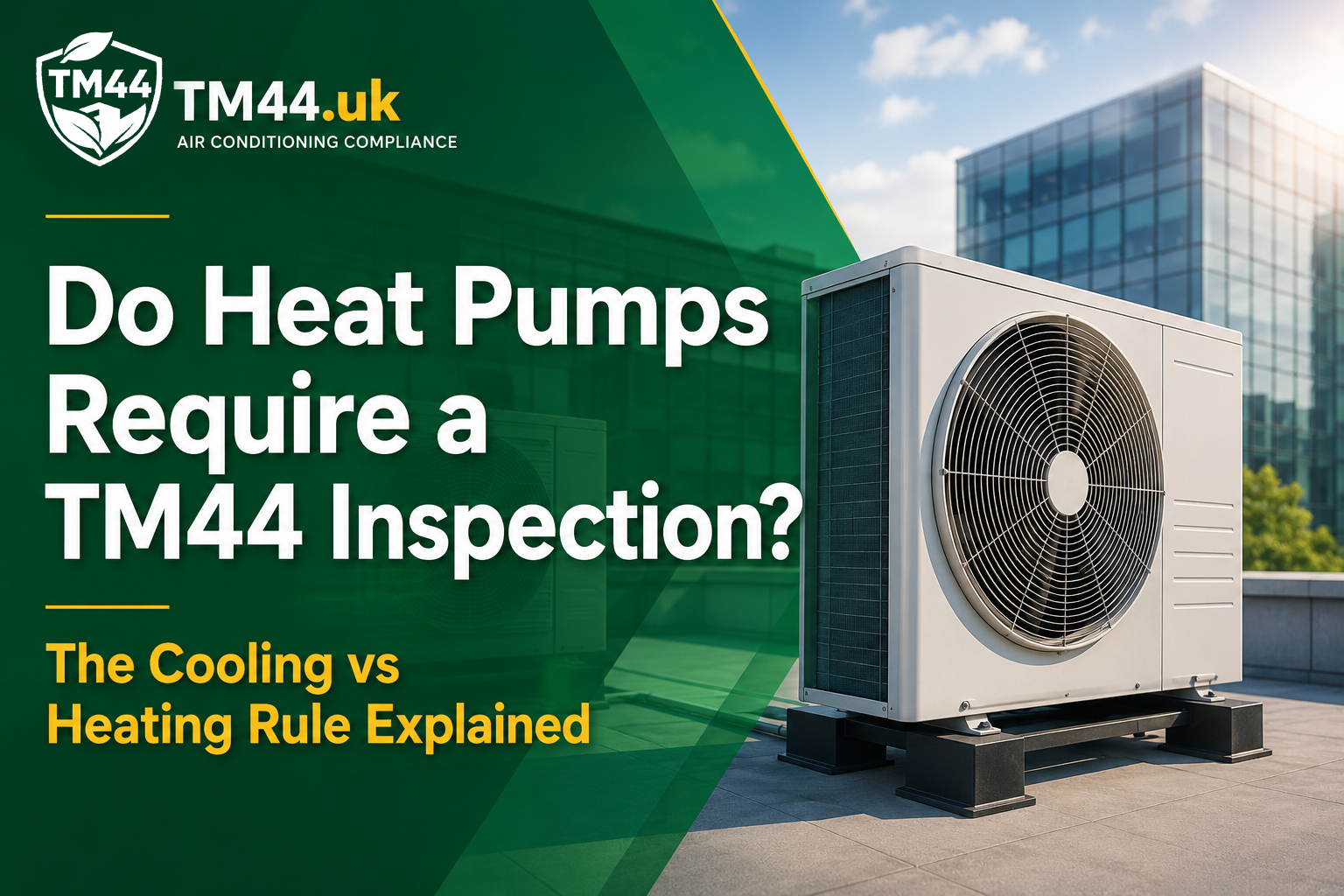
Do Heat Pumps Require a TM44 Inspection? The Cooling vs Heating Rule Explained
June 8, 2026

Written by
TM44TeamAlfa
Heat pumps are now one of the fastest-growing building services technologies in the UK. Commercial landlords, facilities managers, property owners and developers are using them to reduce reliance on older heating systems, improve energy performance and support lower-carbon building strategies.
But there is one compliance question that is often missed:
Do heat pumps require a TM44 inspection?
The direct answer is this: some heat pumps may require a TM44 inspection if they provide cooling to a non-domestic building and the effective rated cooling output exceeds 12kW. A heating-only heat pump is different. A reversible heat pump that can cool offices, retail areas, gyms, clinics, server rooms or other occupied spaces can fall into the same compliance conversation as air conditioning.
This is where many businesses make a costly mistake. They assume “heat pump” means heating only. In reality, many commercial heat pump systems provide both heating and cooling. If the cooling function is present and the combined cooling capacity is high enough, the building may need a valid TM44 air conditioning inspection report.
If you are unsure whether your building may fall under the rules, start with our TM44 checker. It helps property owners, landlords, managing agents and facilities teams understand whether their air conditioning, reversible heat pump or cooling systems may require further review. For the wider legal position, our guide to TM44 inspection requirements in the UK explains how the requirement applies to commercial buildings.
At TM44.uk, we regularly see this confusion during the quote process. A client may say, “We do not have air conditioning, only heat pumps.” Then, once we review the asset list, model numbers or F-Gas register, it becomes clear that the system provides cooling and may exceed the 12kW threshold.
This guide explains the cooling vs heating rule, when heat pumps count, what building owners should check, and how TM44.uk can help you confirm compliance without delay.
What Is a TM44 Inspection?
A TM44 inspection is an air conditioning energy assessment for qualifying non-domestic buildings. It is designed to assess the efficiency, condition, controls, sizing and operation of air conditioning systems.
A TM44 inspection is not the same as a normal maintenance visit. It is also not the same as an F-Gas inspection. A maintenance contractor may service the system, clean filters and check basic operation, while a TM44 assessor reviews the energy performance and compliance position of the cooling system.
A proper TM44 inspection may look at:
• System efficiency
• Cooling capacity
• Equipment condition
• Control settings
• Zoning and operating schedules
• Maintenance evidence
• Whether the system is oversized
• Whether heating and cooling are operating against each other
• Opportunities to reduce energy waste
• Recommendations for improvement
• The overall compliance position of the building
If you want to understand what the final report includes, our TM44 report guide explains what a TM44 report contains and how recommendations are used by building owners, managing agents and facilities teams.
For heat pump systems, this matters because efficient technology can still be operated inefficiently. A modern reversible heat pump can waste energy if it is poorly controlled, fighting another heating system, running outside occupancy hours or cooling spaces that are not being used.
The Key Rule: Heating Alone Is Different From Cooling
The most important point is this:
A heat pump used only for heating is not usually treated the same way as an air conditioning system for TM44 purposes.
A reversible heat pump that provides cooling can be relevant to TM44.
Many modern commercial heat pumps can reverse their operation. In winter, they provide heating. In summer, they provide cooling. In practice, this means the system may be acting like air conditioning during part of the year.
That cooling may serve:
• Offices
• Meeting rooms
• Reception areas
• Retail floors
• Gyms
• Studios
• Clinics
• Treatment rooms
• Server rooms
• Staff areas
• Classrooms
• Hospitality spaces
• Shared commercial areas
If the system provides comfort cooling, the cooling capacity should be checked. The name “heat pump” does not automatically remove the system from TM44 consideration.
This is why terminology causes problems. One person may call the system an air source heat pump. Another may call it comfort cooling. Another may call it VRF, VRV, split system or hybrid air conditioning. A tenant may call it air con. A landlord may call it heating equipment. A facilities manager may only know the manufacturer name.
For TM44 compliance, the function matters more than the label.
Quick Comparison: When a Heat Pump May Count for TM44
| System type | TM44 relevance |
|---|---|
| Heating-only heat pump | Usually not treated as air conditioning for TM44 |
| Reversible heat pump providing cooling | May count if cooling output exceeds the threshold |
| Multiple small split heat pumps | May count if combined cooling output is over 12kW |
| VRF / VRV heat pump system | Often relevant if it provides cooling |
| Tenant-installed comfort cooling | May affect the building’s compliance position |
| Decommissioned equipment | Usually needs evidence that it is genuinely not operational |
| Server room cooling | May need review depending on system type and building context |
This table is not a substitute for a full assessment, but it shows why a quick assumption can be risky. If a system can cool the building, it should be reviewed properly.
Why the 12kW Threshold Matters
The 12kW threshold is one of the most misunderstood parts of TM44 compliance.
Many businesses assume the rule only applies if one unit is larger than 12kW. That is not the safest way to think about it. Several smaller systems can create a combined cooling capacity above the threshold.
Example:
• Reception reversible heat pump: 3.5kW cooling
• Main office reversible heat pump: 5kW cooling
• Meeting room reversible heat pump: 3.5kW cooling
• Server room cooling unit: 2.5kW cooling
Combined cooling output: 14.5kW
In this example, no single unit looks especially large. But together, the building has more than 12kW of cooling capacity. That means the owner, landlord, occupier, tenant or managing agent should check whether a TM44 inspection is required.
For more detail, read our guide to air conditioning over 12kW and TM44 requirements. It explains why smaller split systems, VRF systems and reversible heat pumps can still trigger the need for a TM44 inspection.
The key point is simple: do not assume you are exempt because each individual unit looks small. The combined effective rated cooling output is what needs to be reviewed.
Why Heat Pumps Are Creating a New Compliance Gap
Heat pumps are being installed across commercial properties for good reasons. They can support energy efficiency, reduce reliance on gas, improve comfort and help with building performance strategies.
But the compliance file often does not keep up.
A landlord may upgrade part of a building. A tenant may install new reversible units during a fit-out. A facilities team may replace old electric heaters with heat pump systems. A contractor may install new equipment but not provide a clear asset list. A managing agent may take over a property with incomplete records.
Over time, the building ends up with cooling capacity that nobody has properly documented.
This creates a hidden TM44 risk.
The building may have:
• Reversible heat pumps with cooling capability
• Split systems added after the previous inspection
• VRF or VRV systems serving multiple zones
• Tenant-installed units not listed in landlord records
• Heat recovery ventilation serving cooled areas
• Server room cooling separate from comfort cooling
• Old equipment still present but not clearly decommissioned
• New cooling installed during an EPC improvement project
• Incomplete F-Gas or maintenance records
• No clear responsibility between landlord and tenant
This is also why a planned preventative maintenance contract is not enough by itself. Maintenance may keep the equipment serviced, but it does not replace a TM44 air conditioning energy assessment. Our guide on PPM contracts vs TM44 compliance explains the difference between maintenance responsibility and statutory TM44 compliance.
The issue is usually not deliberate non-compliance. It is usually poor records, unclear responsibility and assumptions about what the system does.
Case Study Example 1: The Office That Thought It Only Had Heating
A small office building replaced old electric heaters with reversible air source heat pump systems. The landlord viewed the project as a heating upgrade. The contractor paperwork described the installation as “heat pump units”. Nobody internally treated it as an air conditioning compliance issue.
Two years later, the managing agent was asked to provide building compliance documents during a lease review. The property had multiple indoor units and outdoor units. When the cooling capacities were checked, the combined cooling output exceeded 12kW.
The issue was not that the landlord had tried to avoid compliance. The issue was that the system was described as heating equipment, even though it also provided cooling.
In this situation, the practical next step is to gather the model numbers, cooling capacities, equipment photos and previous compliance documents, then request a TM44 inspection quote. TM44.uk can review the information, confirm what is likely to be needed and arrange the inspection if required.
The lesson: if a commercial heat pump system can cool occupied areas, check the cooling output before assuming TM44 does not apply.
Case Study Example 2: The Retail Unit With Tenant-Fitted Heat Pumps
A retail tenant installed several reversible split systems during a shop fit-out. The landlord approved the works but did not add the equipment to the central building compliance file. The tenant controlled the systems day to day, but the landlord still needed clarity over the installed equipment and lease responsibility.
When the property was later marketed, the buyer’s solicitor asked for compliance documents. The landlord had an EPC, but no TM44 report. The tenant had maintenance invoices, but no complete capacity schedule. Once the systems were reviewed, the total cooling output was above the threshold.
This caused avoidable delay.
This is common in retail, hospitality and office fit-outs. Tenant works can change the compliance position of a building, especially where new cooling systems are installed after the previous building records were prepared.
Before a sale, lease renewal or refinance, the safer approach is to check the cooling system early. Our guide to TM44 inspections before selling or leasing a commercial property explains why missing TM44 evidence can create due diligence problems.
The lesson: tenant-fitted heat pumps should not be ignored. If they cool the space and contribute to the building’s cooling capacity, they may need to be considered.
Case Study Example 3: The Gym With Heat Recovery and Cooling Confusion
A gym had multiple systems serving workout zones, studios, treatment rooms, changing areas and staff spaces. Some equipment was described as heat recovery. Some was described as ventilation. Some was described as comfort cooling. The asset information was incomplete.
When the site was reviewed, it became clear that several systems were associated with spaces cooled by heat pump equipment. The issue was not just the heat pumps. The wider problem was that the ventilation, heat recovery and cooling records did not clearly show what served which areas.
For buildings such as gyms, clinics, hotels, student accommodation and serviced offices, this is common. The cooling system may not be a simple one-unit installation. It may connect with ventilation, controls, heat recovery and multiple zones.
Where heat recovery, ventilation and cooling systems overlap, the inspection scope may need closer review. If your site also has refrigerant compliance obligations, our F-Gas leak testing and compliance checks service can help keep air conditioning records aligned with wider building compliance.
The lesson: if the building uses heat pumps, ventilation and cooling together, the asset list must be accurate. Otherwise, the quote, inspection and report can all become harder than necessary.
Case Study Example 4: The Commercial Landlord Preparing for EPC Improvements
A commercial landlord wanted to improve a building’s energy performance and reduce reliance on older heating systems. Reversible heat pumps were considered as part of the upgrade plan. The project was mainly discussed as an EPC and energy improvement measure.
However, the proposed units would also provide cooling during summer. This meant the landlord needed to consider TM44 alongside the wider energy strategy.
This is where many property owners miss the connection. Heat pumps can support energy performance, but if they create or increase cooling capacity, they may also create a TM44 compliance requirement.
If you are planning upgrades because of EPC pressure or building performance risk, our MEES compliance support page explains how energy performance, building services and compliance planning can connect.
The lesson: energy upgrades should improve compliance, not create missing paperwork. If reversible heat pumps are installed, add them to the asset list and check whether TM44 applies.
Case Study Example 5: The Managing Agent Taking Over a Building With Poor Records
A managing agent took over a multi-tenant commercial building. The handover file contained utility bills, old maintenance invoices and a basic asset list, but no clear TM44 certificate. Several internal units were described as heat pumps, and some tenants had added their own cooling systems.
The managing agent did not know whether the building was compliant, whether the previous TM44 report had expired, or whether the cooling capacity was above 12kW.
This type of situation is common. When building records are incomplete, TM44 risk can sit unnoticed until a tenant, buyer, landlord, auditor or enforcement officer asks for evidence.
The best response is to create a clean compliance file. Our article on what we need from you for a TM44 quote explains the information that helps us review and quote accurately, even where the asset list is incomplete.
The lesson: if you inherit a building with heat pumps or cooling equipment, do not rely on old assumptions. Review the asset information and confirm the TM44 position.
What Building Owners Should Check
If your commercial building has heat pumps, reversible systems or comfort cooling, do not guess whether TM44 applies. Check the system properly.
Start with these questions:
• Do any heat pumps provide cooling as well as heating?
• What is the rated cooling output of each system?
• Are multiple units under the same building control?
• Are any systems tenant-installed?
• Has the building changed since the last TM44 report?
• Is there a full asset list with make, model and serial numbers?
• Are indoor and outdoor units matched correctly?
• Are heat recovery or ventilation units linked to cooled spaces?
• Is there a previous TM44 report?
• Are any old units still operational?
• Are any systems serving server rooms, gyms, clinics or treatment rooms?
• Who is responsible: landlord, tenant, managing agent or occupier?
Useful documents include:
• Asset list
• F-Gas register
• Maintenance records
• O&M manuals
• Commissioning documents
• Model numbers and data plate photos
• Cooling capacity schedules
• Layout drawings
• Previous TM44 reports
• Lease responsibility information
• Photos of indoor and outdoor units
If you do not have all of this, you can still start the process. Many businesses do not have perfect records. TM44.uk can review the information available and advise what is needed before the site visit.
Heat Pumps, EPCs and MEES: Why This Matters Commercially
Heat pumps are often installed as part of wider energy performance planning. A landlord may install them to improve efficiency, reduce reliance on gas, support a better EPC rating or prepare the property for future standards.
But if the same systems provide cooling, TM44 should be considered as part of the same compliance picture.
This matters for:
• Commercial landlords preparing a property for lease
• Buyers carrying out due diligence
• Tenants fitting out new premises
• Managing agents taking over buildings
• Facilities managers preparing compliance files
• Businesses working toward ESG reporting
• Property owners reviewing EPC or MEES risk
• Multi-site operators trying to standardise compliance
The mistake is treating TM44 as a separate certificate that only applies to old air conditioning systems. Modern commercial buildings often use integrated heating, cooling and ventilation strategies. Heat pumps can sit directly inside that picture.
A building can have a positive energy upgrade and still need the correct compliance documentation.
Does Every Heat Pump Need a TM44 Inspection?
No. Not every heat pump automatically needs a TM44 inspection.
A small system serving a minor area may not exceed the threshold. A heating-only system may not be relevant in the same way. A domestic system in a private dwelling is different from a commercial non-domestic building. A genuinely decommissioned system may not count if it is no longer in use.
But assumptions are risky.
The real question is not:
“Do we have heat pumps?”
The better question is:
“Do we have systems that provide cooling, and is the combined effective rated cooling output above 12kW?”
That is the correct starting point.
If the answer might be yes, use the TM44 checker or send the details through our get a quote page for review.
Common Mistakes With Heat Pumps and TM44
The first mistake is relying on the word “heat” in heat pump. Many people assume heat pumps are only heating equipment. That may be wrong if the system is reversible.
The second mistake is checking only one unit. TM44 often depends on combined cooling output.
The third mistake is ignoring tenant-installed equipment. A tenant fit-out can change the compliance position of a building.
The fourth mistake is relying on an old TM44 report. If equipment has been added, replaced or removed, the old report may no longer reflect the building accurately.
The fifth mistake is not keeping model numbers. Without make and model information, it can take longer to confirm capacity and quote accurately.
The sixth mistake is overlooking ventilation and heat recovery systems connected to cooled spaces.
The seventh mistake is waiting until a sale, lease, audit or enforcement letter. TM44 is easier to manage when planned in advance.
The eighth mistake is treating F-Gas, maintenance and TM44 as the same thing. They are connected, but they are not identical.
The ninth mistake is assuming that energy-efficient technology cannot create compliance responsibility. A heat pump may be efficient, but if it provides cooling, the building owner still needs to understand whether TM44 applies.
How TM44.uk Helps With Heat Pump and Cooling Compliance
TM44.uk provides UK-wide TM44 air conditioning inspections for commercial buildings, including sites with reversible heat pumps, VRF/VRV systems, split systems, rooftop plant, server room cooling and mixed HVAC arrangements.
Our process is designed to make compliance simple.
First, we review your basic information. This may include the property address, asset list, equipment photos, model numbers, previous reports and access details.
Second, we confirm whether the building is likely to need a TM44 inspection and what the inspection scope may involve.
Third, we provide a clear quote based on the available information.
Fourth, an accredited assessor attends site to inspect the relevant equipment, controls and documentation.
Fifth, the draft TM44 report is prepared and issued for review.
Finally, once approved and settled, the report can be officially lodged where required.
TM44.uk supports the full route from initial asset review to inspection, draft report, approval, invoice and certificate lodgement. If you need the report officially lodged, our TM44 certificate and government lodgement page explains how the process works and why proper lodgement matters.
We can support:
• Single commercial properties
• Offices and corporate buildings
• Retail units and shopping centres
• Gyms and leisure buildings
• Healthcare and dental practices
• Schools, colleges and universities
• Hotels and hospitality premises
• Warehouses and industrial sites
• Multi-site portfolios
• Managing agents and facilities companies
• Landlords preparing for sale or lease
• Businesses unsure whether they cross the 12kW threshold
If your building has heat pumps and you are not sure whether TM44 applies, the safest step is to get the system reviewed.
What Information Should You Send for a Heat Pump TM44 Quote?
To quote accurately, send as much of the following as possible:
• Full site address
• Number of indoor and outdoor units
• Make and model numbers
• Photos of data plates if available
• Asset list or F-Gas register
• Details of whether the units heat, cool or both
• Any previous TM44 report
• Access information for roofs, plant rooms or internal areas
• Site contact details
• Details of heat recovery or ventilation equipment
• Any known tenant-installed systems
• Preferred inspection date or urgency
Do not worry if the information is incomplete. Many businesses do not have a perfect asset list. But the more information you provide, the faster and more accurate the quote will be.
Why This Topic Will Become More Important
Heat pumps are not going away. More commercial buildings will use them because of energy prices, carbon targets, EPC pressure and the shift toward electric building services.
That means the boundary between heating and air conditioning will become less obvious.
Older building services were easier to understand: boilers heated, air conditioning cooled. Modern systems are different. One system may heat, cool, recover energy, integrate with ventilation and serve multiple zones. That makes good records more important, not less.
For property owners, the risk is not only technical. It is commercial.
A missing TM44 report can cause problems during:
• Property sales
• Lease renewals
• Tenant handovers
• Compliance audits
• Insurance reviews
• Facilities management transitions
• ESG reporting
• Portfolio risk reviews
• Enforcement checks
A heat pump installation may be a positive energy upgrade, but it should still be documented properly. If it provides cooling and pushes the building over the threshold, TM44 compliance should be part of the building file.
Final Answer: Do Heat Pumps Require a TM44 Inspection?
Some heat pumps may require a TM44 inspection. The deciding factor is not the name “heat pump”. The deciding factor is whether the system provides cooling to a non-domestic building and whether the effective rated cooling output exceeds the TM44 threshold.
If your system only provides heating, TM44 may not apply in the same way.
If your system is reversible and provides cooling, it may count toward the building’s air conditioning capacity.
If the combined cooling output is over 12kW, you should check whether a TM44 inspection is required.
For commercial landlords, managing agents, facilities managers and business owners, the safest approach is to review the equipment before assuming you are exempt. A quick asset review can prevent missed compliance, due diligence delays and avoidable questions later.
If your commercial building has heat pumps, reversible systems, split units, VRF, VRV or any cooling equipment that may exceed 12kW, do not leave the compliance position unclear.
Start with our TM44 checker if you are unsure whether your system may need attention. If you already know the building has qualifying cooling equipment, request a TM44 inspection quote and send us the available asset information.
TM44.uk can support the full process, including system review, site attendance, TM44 reporting and certificate lodgement. We also help clients connect TM44 with related compliance areas such as F-Gas checks, EPC improvement planning and MEES compliance support.
A heat pump may be an energy-efficient upgrade, but if it provides cooling, it should still be assessed correctly. Get the compliance position confirmed now and keep your commercial building file clean.
Can TM44.uk inspect buildings with heat pumps?
Yes. TM44.uk provides UK-wide TM44 inspections for commercial buildings with heat pumps, split systems, VRF, VRV, rooftop plant and other cooling equipment.
Heat Pumps & TM44 Compliance
Frequently Asked Questions
Clear answers for commercial building owners, landlords, managing agents and facilities teams checking whether heat pumps, reversible systems or cooling equipment may require a TM44 inspection.
Do heat pumps require a TM44 inspection?
Some heat pumps may require a TM44 inspection if they provide cooling to a non-domestic building and the effective rated cooling output exceeds 12kW. A heating-only heat pump is different, but a reversible heat pump that cools offices, retail spaces, gyms, clinics or other commercial areas should be checked properly.
Does a heating-only heat pump count as air conditioning?
A heating-only heat pump is not normally treated the same as an air conditioning system for TM44 purposes. The risk comes from reversible heat pumps or systems that provide comfort cooling during warmer months. If the system can cool the building, the cooling capacity should be reviewed.
Can several small heat pumps trigger TM44 requirements?
Yes. TM44 compliance is not always based on one individual unit. Several smaller reversible heat pumps can exceed the 12kW threshold when their cooling capacities are combined. This is common in offices, retail units, clinics, gyms and commercial buildings where systems have been added over time.
What is the cooling vs heating rule for TM44?
The practical rule is that heating-only systems are different from cooling systems. If the equipment provides cooling to occupied commercial spaces, it may be relevant to TM44. The system name is less important than what the equipment actually does and the total rated cooling output.
Do reversible heat pumps count towards the 12kW threshold?
Reversible heat pumps can count towards the 12kW threshold if they provide cooling. Building owners should check the rated cooling output of each unit, not just the heating output. If the combined cooling capacity is over 12kW, a TM44 inspection may be required.
Is a TM44 inspection the same as an F-Gas check?
No. An F-Gas check focuses on refrigerant leak testing and refrigerant compliance. A TM44 inspection is an air conditioning energy assessment that reviews efficiency, controls, sizing, condition and recommendations for improvement. Both can be relevant, but they are not the same service.
What information do I need for a TM44 quote if my building has heat pumps?
Useful information includes the site address, number of indoor and outdoor units, make and model numbers, photos of data plates, cooling capacities, F-Gas records, maintenance records, roof or plant access details, and any previous TM44 report. If the asset list is incomplete, TM44.uk can still review the available information and advise the next step.
Can tenant-installed heat pumps affect TM44 compliance?
Yes. Tenant-installed reversible heat pumps or comfort cooling systems can affect the compliance position of the building. This is especially important before a lease renewal, property sale, refinance, tenant handover or managing agent change. The equipment should be recorded and included in the building compliance file where relevant.
Can TM44.uk inspect commercial buildings with heat pumps?
Yes. TM44.uk provides UK-wide TM44 inspections for commercial buildings with reversible heat pumps, split systems, VRF, VRV, rooftop plant, server room cooling and mixed HVAC systems. We can review your asset information, quote the inspection, arrange attendance and support the report and lodgement process.
Not sure whether your heat pumps need a TM44 inspection?
Send us your site address, asset list, model numbers or photos and we can review the likely compliance position.
Case Studies & Success Stories Energy Efficiency & Cost Savings Guides & How-To Articles Industry News & Updates TM44 Compliance & Regulations
Related Posts
July 16, 2026