September 8, 2026
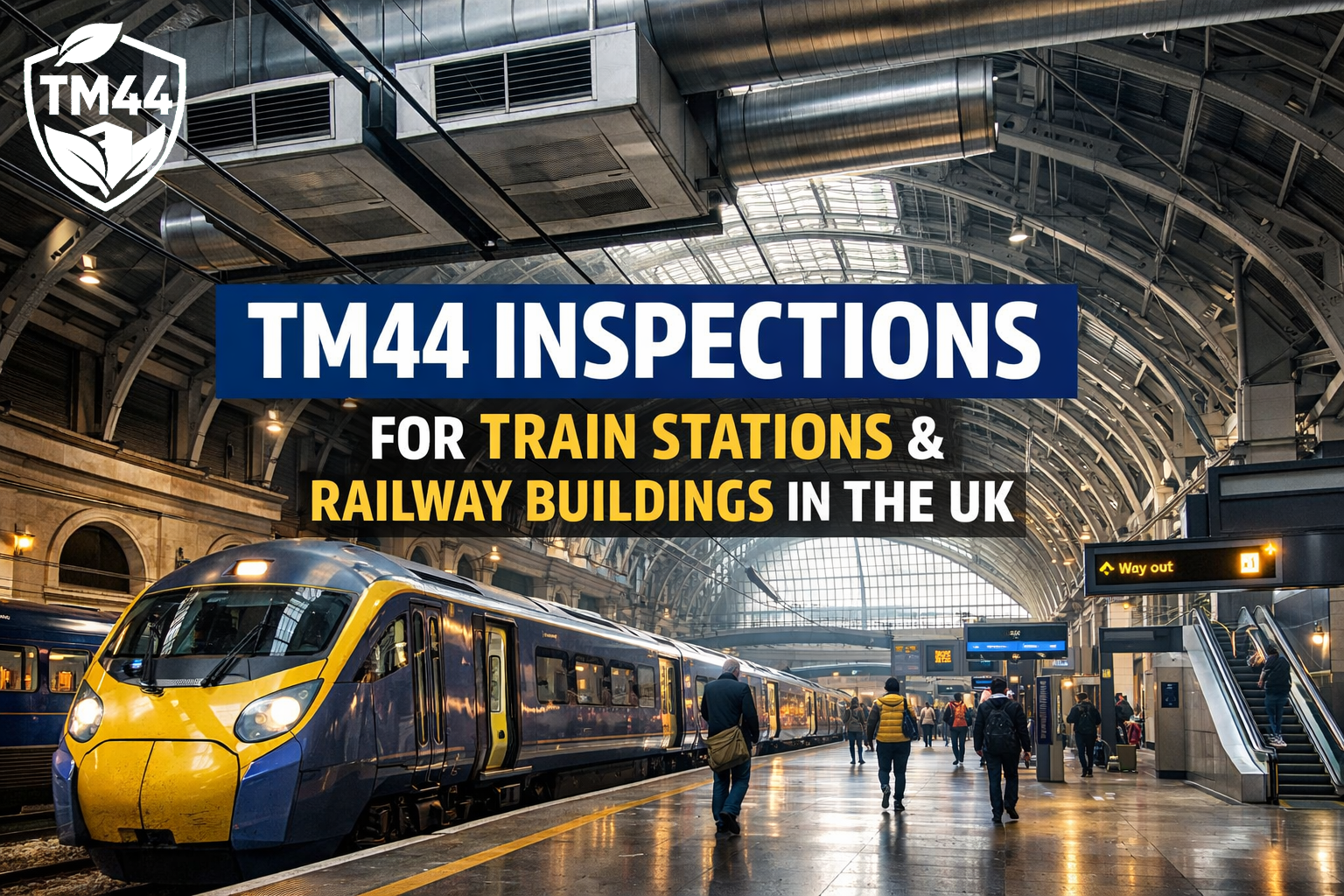
TM44 Inspections for Train Stations & Railway Buildings in the UK: Compliance Guide for Operators and Infrastructure Managers
March 6, 2026

Written by
TM44TeamAlfa
Modern railway stations are among the most complex and energy-intensive public buildings in the United Kingdom. From major metropolitan transport hubs in London to regional stations, depots, and rail infrastructure facilities, these environments rely heavily on sophisticated air-conditioning and ventilation systems to maintain safe and comfortable conditions for passengers, staff, and operational equipment.
Large passenger volumes, continuous operation, and expansive indoor spaces mean that railway buildings often depend on powerful cooling systems operating across multiple zones. These systems include central chiller plants, VRF networks, air-handling units, and dedicated cooling systems for control rooms, retail spaces, and operational facilities.
However, many infrastructure operators and facilities managers are unaware that these systems fall under strict UK energy compliance regulations.
Under the Energy Performance of Buildings Regulations, any building with air-conditioning systems exceeding 12kW cooling capacity must undergo regular TM44 air-conditioning inspections carried out by accredited energy assessors.
Railway infrastructure is particularly affected because stations frequently contain:
• Large air-handling units (AHUs)
• VRF and VRV cooling systems
• Centralised chiller plants
• Platform ventilation systems
• Cooling units serving retail areas and offices
• Server rooms and operational control centres
• Ventilation systems for underground environments
Because these systems often operate together across large buildings, the combined cooling capacity easily exceeds the 12kW regulatory threshold.
In this comprehensive guide, we explain how TM44 inspections apply to train stations and railway buildings, why compliance is essential for transport infrastructure operators, and how regular inspections can help reduce energy consumption while avoiding regulatory penalties.
Why Train Stations Require TM44 Inspections
Railway stations operate almost continuously and serve thousands — sometimes millions — of passengers each year. Maintaining comfortable temperatures and good air quality across large indoor spaces requires complex HVAC infrastructure.
Unlike typical commercial buildings, railway stations must regulate environmental conditions across multiple zones simultaneously. These include passenger areas, operational control facilities, staff spaces, retail areas, and technical infrastructure rooms.
Examples of station environments requiring cooling systems include:
• Passenger concourses
• Ticket halls
• Retail units and food outlets
• Office spaces for station management
• Staff facilities and break rooms
• Signalling and control rooms
• Waiting areas and passenger lounges
• Underground ventilation zones
When the total cooling capacity across these systems exceeds the 12kW regulatory threshold, the building falls under the Energy Performance of Buildings Regulations.
This means operators must arrange a TM44 inspection at least every five years.
A TM44 inspection evaluates several important factors, including:
• The energy efficiency of cooling systems
• The suitability of system design for the building
• Maintenance quality and operational condition
• Opportunities to reduce energy consumption
• Compliance with regulatory requirements
For infrastructure managers, these inspections provide valuable insights into system performance and long-term operational efficiency.
You can read more about the fundamentals of TM44 compliance in our guide:
https://tm44.uk/news-blog/what-is-a-tm44-inspection/
TM44 Regulations for Transport Infrastructure
The UK government introduced TM44 regulations to reduce energy waste in large buildings that rely heavily on air-conditioning systems.
These regulations form part of the Energy Performance of Buildings Directive, which aims to improve energy efficiency across commercial properties.
Transport infrastructure facilities are particularly affected because they typically operate for extended hours and require large cooling systems to maintain safe conditions.
Buildings commonly affected include:
• Railway stations
• Underground stations
• Airport terminals
• Bus terminals and transport hubs
• Maintenance depots
• Operational infrastructure facilities
Because these buildings operate for long periods and serve high passenger volumes, inefficient cooling systems can result in significant energy waste.
A TM44 inspection helps infrastructure operators identify inefficiencies and implement improvements that reduce both energy consumption and operational costs.
If a building fails to comply with TM44 regulations, enforcement authorities may require urgent inspections or issue financial penalties.
More information about enforcement can be found here:
https://tm44.uk/news-blog/tm44-enforcement-process-uk-2026/
Types of Cooling Systems Found in Railway Stations
Railway stations typically operate several types of HVAC systems designed to manage large and complex environments.
VRF and VRV Systems
Variable Refrigerant Flow systems are commonly used in retail spaces and office areas within stations.
These systems allow flexible cooling control across multiple zones and can operate efficiently in buildings with varying occupancy levels.
Chiller Systems
Large transport hubs frequently rely on centralised chiller plants that distribute chilled water throughout the building via air-handling units.
These systems are powerful but require proper maintenance and optimisation to operate efficiently.
Air Handling Units (AHUs)
Air-handling units distribute cooled air throughout large spaces such as concourses and passenger areas.
They also regulate humidity levels and improve indoor air quality.
Split Systems
Smaller spaces such as ticket offices, shops, and equipment rooms often operate individual split air-conditioning units.
Ventilation and Exhaust Systems
Underground platforms and enclosed railway environments require powerful ventilation systems to maintain air quality and temperature stability.
Each of these systems contributes to the overall cooling capacity of the building. Once the combined capacity exceeds the 12kW threshold, a TM44 inspection becomes mandatory.
When Railway Operators Must Obtain a TM44 Certificate
Railway operators must arrange a TM44 inspection under several circumstances.
These include situations where:
• The total air-conditioning capacity exceeds 12kW
• The building has not been inspected within the last five years
• The property is being sold or leased
• Regulatory authorities request compliance documentation
• Significant HVAC system upgrades have been installed
After the inspection is completed, the assessor produces a TM44 report and certificate, which is then lodged on the official government register.
This certificate confirms that the inspection has been completed and provides recommendations for improving system efficiency.
Learn how the inspection process works here:
https://tm44.uk/news-blog/steps-for-tm44-process/
Energy Efficiency Challenges in Railway Infrastructure
Railway stations present unique energy challenges due to their scale and operational demands.
Cooling systems must maintain stable conditions across large indoor spaces while accommodating fluctuating passenger volumes.
During TM44 inspections, assessors frequently identify several common issues.
Oversized Cooling Systems
Many stations operate cooling systems designed for peak demand, which may run inefficiently during normal operating conditions.
Poor Maintenance
Dirty filters, blocked coils, and incorrect refrigerant levels can significantly reduce system efficiency.
Outdated Equipment
Older chillers and compressors often consume far more energy than modern equipment.
Control System Issues
Incorrect thermostat settings and poorly configured building management systems can result in unnecessary energy consumption.
Continuous Operation
Because railway stations operate for long hours, even small inefficiencies can result in substantial energy costs over time.
TM44 inspections help infrastructure managers identify these problems and implement effective solutions.
How TM44 Inspections Help Railway Operators Reduce Energy Costs
While compliance is the primary purpose of TM44 inspections, they also provide valuable opportunities to improve energy efficiency.
Typical recommendations found in TM44 reports include:
• Optimising system control strategies
• Replacing inefficient equipment
• Adjusting system sizing to match demand
• Improving airflow distribution
• Enhancing maintenance procedures
These improvements can significantly reduce electricity consumption across large transport facilities.
Our article on energy efficiency improvements explains this further:
https://tm44.uk/news-blog/top-10-tm44-fixes-cut-energy-bills-2026/
Case Study: TM44 Inspection at a Major Transport Hub
A large UK railway station with a total cooling capacity exceeding 500kW recently underwent a TM44 inspection.
The site included:
• Multiple air-handling units
• A central chiller plant
• VRF cooling systems serving retail units
• Dedicated cooling systems for operational control rooms
During the inspection, several inefficiencies were identified, including:
• Poor airflow balancing across concourse areas
• Incorrect thermostat calibration
• Inconsistent maintenance procedures
• Oversized cooling loads in certain zones
After implementing the recommendations provided in the TM44 report, the station operator achieved an 18 percent reduction in energy consumption.
This resulted in tens of thousands of pounds in annual energy savings while improving passenger comfort and system reliability.
Common Compliance Risks in Railway Buildings
Infrastructure operators sometimes assume their buildings are compliant when they are not.
Common risks include:
• Expired TM44 certificates
• System upgrades that increase total cooling capacity
• Newly installed systems not included in inspections
• Multiple smaller systems that collectively exceed 12kW
If authorities discover non-compliance, they may issue enforcement notices requiring immediate inspections.
You can read more about compliance triggers here:
https://tm44.uk/news-blog/tm44-compliance-triggers/
Why Multi-Site Infrastructure Operators Should Prioritise TM44 Compliance
Railway infrastructure organisations often manage large property portfolios.
These may include:
• Station buildings
• Maintenance depots
• Signalling control centres
• Transport offices
• Passenger terminals
Managing TM44 compliance across dozens of locations can be challenging.
Many organisations therefore choose to coordinate inspections across multiple sites to ensure consistent compliance.
You can learn more about this approach here:
https://tm44.uk/news-blog/tm44-for-multi-site-businesses-uk/
How to Book a TM44 Inspection for Railway Infrastructure
Booking a TM44 inspection is straightforward when working with an accredited assessor experienced in large commercial buildings.
The inspection process typically includes:
-
Site review and system assessment
-
Inspection of HVAC equipment
-
Energy efficiency analysis
-
Preparation of the TM44 report
-
Government certificate lodgement
Once the inspection is complete, operators receive both the full TM44 report and official registration confirmation.
For more information or to request a quotation, visit:
Final Thoughts
Railway stations and transport infrastructure facilities are among the most energy-intensive buildings in the UK.
Their large and complex cooling systems make TM44 inspections essential for maintaining regulatory compliance and improving operational efficiency.
By conducting regular inspections, infrastructure operators can:
• Ensure full regulatory compliance
• Reduce energy consumption
• Improve HVAC system performance
• Lower operational costs
• Avoid enforcement penalties
For railway operators, transport authorities, and infrastructure managers, TM44 inspections represent a valuable opportunity to improve both sustainability and building performance.
If your railway station or transport facility operates air-conditioning systems exceeding 12kW, arranging a TM44 inspection is the first step toward ensuring full compliance and long-term efficiency.
Energy Efficiency & Cost Savings Guides & How-To Articles Industry News & Updates TM44 Compliance & Regulations
Related Posts
August 28, 2026