September 8, 2026
TM44 for Laboratories, Clean Rooms and High-Tech Manufacturing Sites: UK Compliance Guide
May 26, 2026

Written by
TM44TeamAlfa
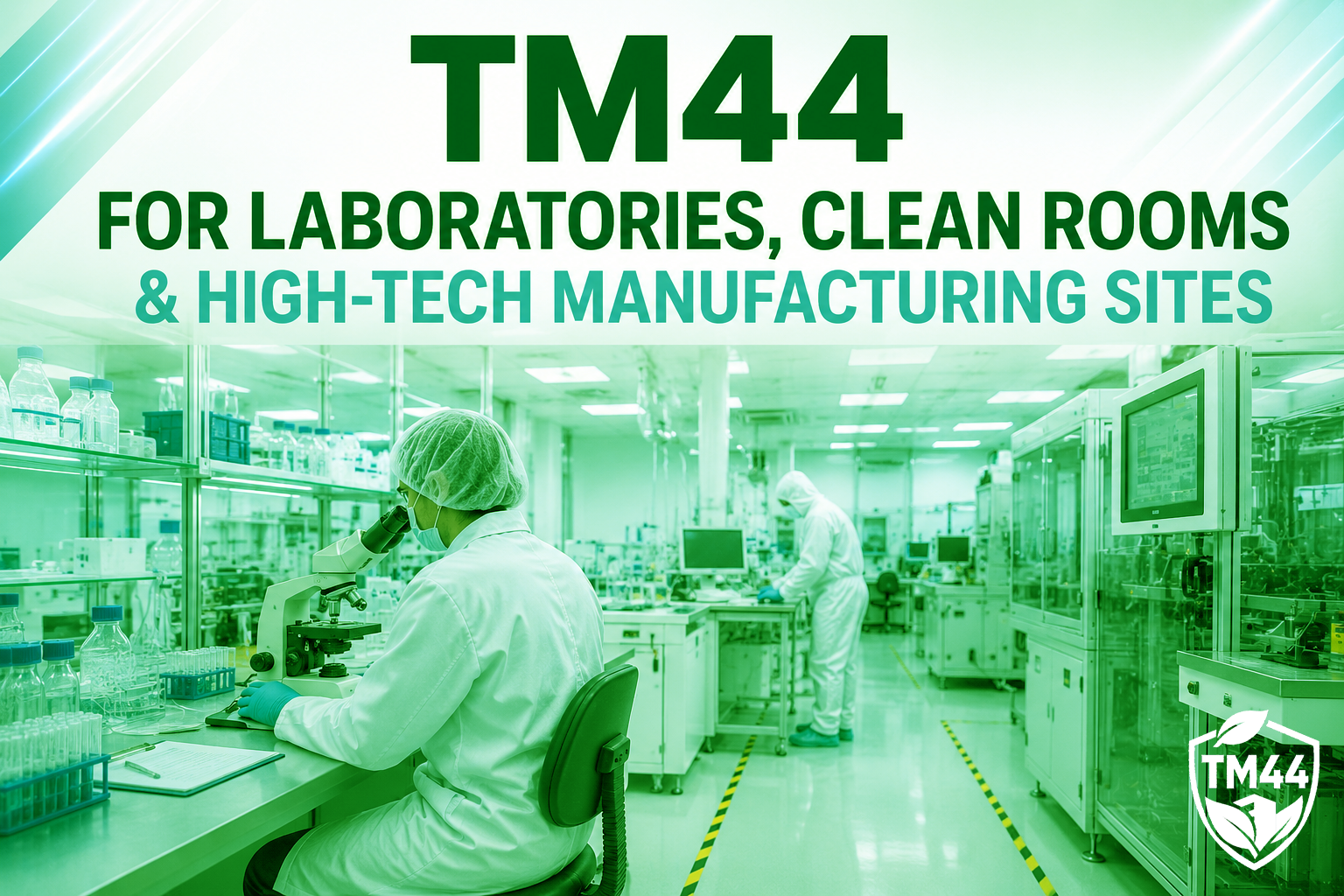
Laboratories, clean rooms and high-tech manufacturing sites often depend on air conditioning far more than ordinary commercial buildings. In these environments, cooling is not just about keeping staff comfortable. It can protect sensitive equipment, maintain controlled environments, support production quality, reduce operational risk and prevent expensive energy waste.
This is why TM44 compliance matters.
In the UK, commercial buildings with air conditioning systems over 12kW generally require a TM44 air conditioning inspection every 5 years. TM44 applies across many commercial and public-sector buildings, and industrial or technical sites such as laboratories and high-tech manufacturing facilities can fall within scope where significant cooling systems are installed.
If your site has multiple split systems, VRF/VRV units, chillers, AHUs, technical cooling or clean room cooling, it is worth checking whether a TM44 inspection is required.
At TM44.uk, we help laboratories, clean rooms, research facilities and manufacturing sites across the UK arrange TM44 inspections, reports and government lodgement.
Why laboratories and clean rooms are higher-risk TM44 sites
A normal office may have a few air conditioning units for comfort cooling. A laboratory or clean room can be much more complex.
These sites may include:
• Staff comfort cooling
• Clean room temperature control
• Specialist ventilation
• Laboratory cooling
• Production area cooling
• Server room cooling
• Equipment protection cooling
• Refrigerant-based systems
• Rooftop condensers
• Internal split units
• Central plant or chillers
• Multiple systems across different zones
The main risk is that nobody has one clear view of the total cooling capacity. One department may manage clean room cooling, another may manage office cooling, and another may manage maintenance records. Over time, systems get added, replaced, decommissioned or forgotten.
TM44 looks at the combined effective rated output of air conditioning systems. Several smaller systems can still trigger the requirement if the combined capacity is over 12kW.
That means a laboratory, medical testing centre, pharmaceutical site, electronics facility, university research building or precision manufacturing site may require a TM44 inspection even if no single unit looks especially large.
For the legal basics, see our guide to TM44 inspection requirements in the UK.
What TM44 checks in technical buildings
A TM44 inspection is an energy assessment of air conditioning systems. It is not the same as routine maintenance, F-Gas servicing or a repair visit.
A TM44 inspection may review:
• The type and size of air conditioning systems
• System controls and operating schedules
• Maintenance condition
• Evidence of servicing
• Whether systems are oversized or poorly controlled
• Opportunities to improve efficiency
• System zoning and operating patterns
• Recommendations for reducing energy waste
• Report and certificate lodgement where required
For laboratories and clean rooms, the assessor must understand that some cooling is operationally critical. A clean room cannot simply be treated like a meeting room. The aim is not to interfere with production or research. The aim is to identify compliance status and practical efficiency improvements without compromising the controlled environment.
Common TM44 problems found in laboratories and manufacturing sites
Technical sites often have cooling systems that have grown over many years. This creates compliance gaps.
Common issues include:
• No complete air conditioning asset register
• Indoor and outdoor units not clearly matched
• Old equipment still listed as active
• Decommissioned systems not properly recorded
• Maintenance records split between contractors
• Cooling running outside working hours
• Heating and cooling operating at the same time
• Server rooms being overcooled
• Clean room cooling not separated from comfort cooling
• Poor labelling of plant and condensers
• No record of previous TM44 inspection
• Expired TM44 report
• Multi-building sites treated as one simple inspection
• Nobody knowing whether the 12kW threshold has been exceeded
These are exactly the issues that can cause laboratories and manufacturing businesses to miss TM44 compliance without realising it.
Case study example: private laboratory facility
A private laboratory has several testing rooms, staff offices and a small technical area. Each individual air conditioning unit looks modest, but when the systems are added together, the combined cooling capacity exceeds 12kW.
The facilities manager assumes TM44 does not apply because the building is not a normal office.
After checking the asset list, the site is found to be within scope. A TM44 inspection identifies:
• Several units running after hours
• No clear central cooling schedule
• Missing maintenance records for two systems
• Poor labelling between indoor and outdoor units
• Older units consuming more energy than necessary
• No previous TM44 report available
The business receives a compliant TM44 report and a clearer picture of its cooling assets.
Case study example: clean room and precision manufacturing site
A high-tech manufacturing site operates clean rooms, office areas, staff welfare areas and technical storage rooms. The clean room cooling is essential for production, but the general office cooling is poorly controlled.
During the TM44 review, the assessor separates critical cooling from comfort cooling. The report does not recommend anything that would compromise production conditions. Instead, it highlights practical improvements in the non-critical areas, including timer controls, maintenance record improvements and better zoning.
This is where a specialist TM44 approach matters. The inspection should support the business, not disrupt it.
For complex sites, our TM44 portfolio management service can help organise multi-site or multi-building compliance.
Does process cooling count for TM44?
This can be a technical question. TM44 is mainly focused on air conditioning systems used to provide cooling for occupants, but many real buildings have mixed-use cooling systems. In laboratories and manufacturing environments, comfort cooling, technical cooling and process-related cooling can overlap.
The safest approach is to check the site properly instead of guessing.
If you have:
• Clean rooms
• Laboratories
• Specialist production spaces
• Technical cooling
• Server rooms
• Multiple split systems
• VRF/VRV systems
• Chillers or AHUs
• Cooling across several buildings
then you should confirm whether a TM44 inspection is required.
You can start with our TM44 checker tool or request a direct review through our quote page.
Who is responsible for TM44 compliance?
Responsibility usually sits with the person or organisation that controls the air conditioning system.
This may be:
• The building owner
• The landlord
• The occupier
• The tenant
• The facilities manager
• The managing agent
• The company operating the cooling system
In technical buildings, responsibility can become unclear. A landlord may control the main building systems, while the tenant may control laboratory or production cooling. This is why it is important to define the system scope before the inspection.
For report and lodgement guidance, see our TM44 certificate and government lodgement service.
Why TM44 matters beyond legal compliance
For laboratories and high-tech facilities, TM44 is not only about avoiding penalties. It can also help identify avoidable energy waste.
Many UK buildings are still believed to be non-compliant, and the TM44 market has a major compliance gap. The market analysis shows that eligible systems are widely under-inspected, with significant opportunity for improved compliance and energy efficiency.
A good TM44 inspection can support:
• Legal compliance
• Energy cost reduction
• ESG reporting
• Facilities management
• Maintenance planning
• Asset register improvement
• Better cooling control
• Risk reduction
• Evidence for landlords, tenants and managing agents
This is especially important for energy-intensive buildings where cooling runs for long hours.
How to prepare for a TM44 inspection
Before booking a TM44 inspection, try to prepare:
• Site address
• Company details
• Existing asset register
• Make and model of each unit, if available
• Cooling capacity in kW, if known
• Previous TM44 report, if available
• Maintenance records
• Access details
• Site contact details
• Building layout or plant location information
• Details of any decommissioned systems
Do not worry if you do not have everything. TM44.uk can still advise what is needed.
TM44.uk services for laboratories and technical sites
TM44.uk provides UK-wide TM44 air conditioning inspection support for:
• Laboratories
• Clean rooms
• Pharmaceutical sites
• Medical testing centres
• Research facilities
• Universities
• High-tech manufacturing sites
• Electronics manufacturing sites
• Precision engineering facilities
• Multi-building commercial sites
• Offices with technical cooling
• Server and equipment cooling environments
Our service can include:
• Initial compliance review
• Asset information check
• Site inspection booking
• Accredited assessor allocation
• TM44 report preparation
• Government lodgement
• Multi-site coordination
• Emergency TM44 support
• Follow-up energy efficiency recommendations
For urgent inspections, see our Emergency TM44 24/48 Hour Service.
Final advice
If your laboratory, clean room or high-tech manufacturing site has several air conditioning systems, do not assume you are exempt. These buildings often have complex cooling arrangements, and the combined capacity can easily exceed the TM44 threshold.
A TM44 inspection can help you confirm compliance, reduce risk and understand where your cooling systems may be wasting energy.
To check your site, contact TM44.uk and request a TM44 inspection quote. We cover London and the wider UK.
TM44 Checker v9 Pro
Check TM44 compliance status in seconds
Search the official GOV data routes and public register fallback. If a record is missing or unclear, request a manual compliance review from TM44.uk.
Official data routesGOV fallbackCommercial buildings only
Case Studies & Success Stories Energy Efficiency & Cost Savings Guides & How-To Articles Industry News & Updates TM44 Compliance & Regulations
Related Posts
August 28, 2026