September 8, 2026
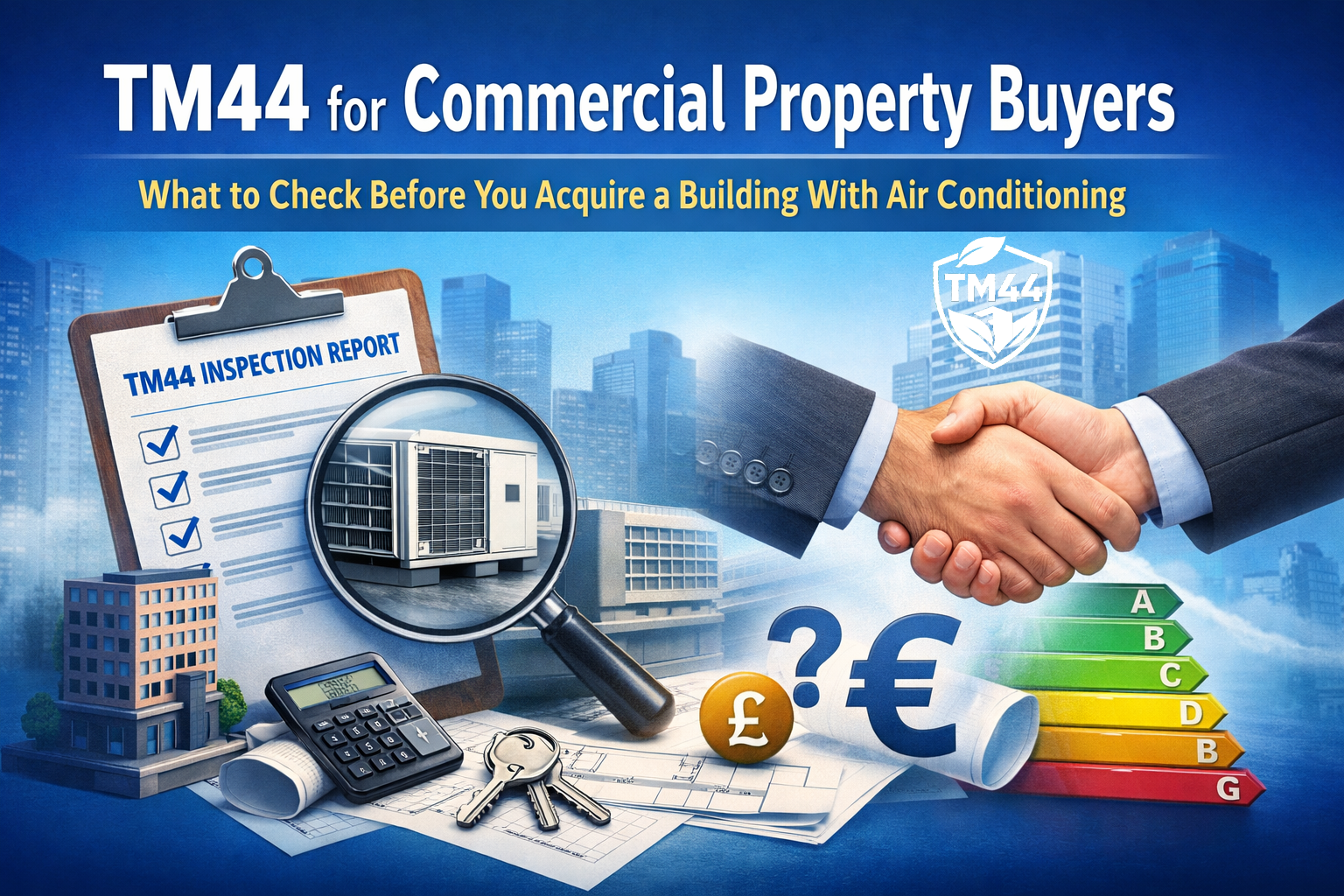
TM44 for Commercial Property Buyers: What to Check Before You Acquire a Building With Air Conditioning
April 9, 2026

Written by
TM44TeamAlfa
Buying a commercial property with air conditioning can look simple at first. The numbers may stack up, the location may feel right, and the lease profile may look attractive on paper. But if the building includes air conditioning systems and the compliance side has been neglected, you could be inheriting far more than bricks, rent, and service charge data.
You could be taking on hidden inefficiency, weak controls, overdue compliance, and future costs that were never properly priced into the deal.
That is exactly why TM44 matters.
A lot of commercial buyers still treat TM44 like a minor technical extra that can be sorted after completion. That is the wrong mindset. If the building has qualifying systems, TM44 should sit inside your due diligence process just like title review, lease review, asbestos information, fire documentation, and energy data.
A valid TM44 report can tell you whether the air conditioning systems have been reviewed properly, whether the building is potentially exposed to compliance risk, and whether the previous owner has been managing the HVAC side of the asset with any real discipline. That matters even more in a market where historic compliance has been weak and a large share of qualifying buildings are believed to have operated without up-to-date inspections.
If you are buying an office, retail unit, mixed-use building, leisure site, healthcare premises, hotel, or investment property with conditioned commercial space, this guide will show you exactly what to check before you exchange contracts or complete.
Why TM44 should be part of commercial property due diligence
When buyers review a commercial building, they usually focus on headline items first. They look at rent, tenant strength, repair liabilities, service charge trends, EPC rating, M&E condition, and capex exposure.
All of that matters.
But air conditioning compliance often gets ignored until somebody asks a last-minute question or the buyer takes over and realises key documents are missing.
That is where deals start getting messy.
TM44 is not just a certificate for the file. It can reveal whether the building’s cooling systems are being run efficiently, whether they are being maintained sensibly, whether there are control issues, and whether the next owner could be stepping into an avoidable operational problem.
If you are still in the early stages of reviewing the asset, it helps to understand the basics first. Our page on TM44 inspection requirements in the UK gives a useful starting point if you need a quick overview of who the regulation applies to and when it matters.
What TM44 actually covers
TM44 is the inspection regime for qualifying air conditioning systems in non-domestic buildings. In practical terms, if a commercial building has air conditioning systems with a combined effective rated output above 12kW, the site may require a TM44 inspection, usually every five years, carried out by an accredited assessor and properly lodged.
That point is important because many buyers confuse TM44 with general servicing or maintenance.
It is not the same as:
- a routine maintenance contract
- an F-Gas check
- an EPC
- a reactive AC repair visit
- a general mechanical inspection
TM44 is focused specifically on the inspection of air conditioning systems from a legal compliance and energy efficiency perspective. It looks at whether systems appear suitable for the building, whether controls are sensible, whether maintenance standards are adequate, and whether there are improvements that could reduce waste and improve performance.
If you want more context around what the document itself represents, our TM44 report page and TM44 certificate page are useful support resources.
The first question every buyer should ask
Before you get too deep into the deal, ask one direct question:
Does this building have air conditioning systems that take the combined effective rated output above 12kW?
If the answer is yes, or even maybe, you should investigate properly.
This is where buyers often slip up. They see a few indoor units or a couple of split systems and assume the setup is too small to matter. Then later they discover that multiple smaller units, taken together, push the building over the threshold.
That is why you should never guess.
Ask for:
- equipment schedules
- condenser and indoor unit model numbers
- maintenance logs
- system layouts
- O&M documents
- previous TM44 records
- F-Gas records
- any plant schedules used in managing the building
If you want a quicker way to sense-check whether a building may fall within scope, your TM44 checker can be linked naturally from this section as a useful step before full technical review.
The second question: is there a valid TM44 report in place right now?
This is one of the cleanest and most revealing due diligence questions you can ask.
Ask the seller, landlord, managing agent, or surveyor for:
- the latest TM44 inspection report
- the inspection date
- confirmation of validity
- the report reference
- evidence of lodgement
- any recommendations that were acted on afterward
If they cannot provide it, do not just move on casually.
Ask why.
Sometimes the answer is administrative. Sometimes the report has simply expired. Sometimes the building changed hands and nobody kept the paperwork straight. But sometimes the real issue is that the building has not been properly managed on the HVAC and compliance side for years.
That matters because the moment you complete, the problem becomes yours.
If the seller says a report exists but nobody can locate it, you may want to ask them to check against the TM44 register or review your own process around the TM44 certificate government lodgement side of compliance. Your explainer on what the TM44 register is also fits naturally here for readers who do not yet understand how lodged reports and record checking fit together.
What a missing or expired TM44 report can really tell you
A missing TM44 report is not just a paperwork issue.
It can be a signal.
It can suggest weak building compliance processes, poor asset visibility, reactive rather than planned management, and a wider culture of deferred attention around plant and energy performance. That is one reason this issue matters so much in acquisitions. You are not only checking whether a legal requirement has been met. You are checking what the building’s compliance behaviour says about the asset as a whole.
A building with no valid report may also indicate:
- the systems have not been strategically reviewed for years
- maintenance may have focused on keeping plant running rather than operating efficiently
- controls may be poor or outdated
- no one has properly challenged whether the systems are oversized, badly zoned, or wasting energy
- you may face immediate post-completion action
Industry analysis suggests overall compliance in this market has historically been low, with many qualifying buildings operating without up-to-date TM44 inspections. That means this is not some rare edge case. It is a genuine acquisition risk across the UK commercial market.
If you are trying to understand how risk and enforcement connect, this is also a good point in the article to naturally link to TM44 enforcement, fines and penalties in the UK, TM44 regulations UK, and TM44 legal requirements for commercial buildings.
The documents you should request before exchange
If you are buying a commercial building with air conditioning, ask for a focused HVAC and compliance pack, not just whatever happens to be in the legal folder.
At minimum, request:
1. The latest TM44 report
This tells you whether the site has been inspected, when that happened, and what recommendations were made.
2. Evidence of lodgement
A report that has not been properly lodged is not the same as a completed compliant process.
3. The full asset list
You want indoor and outdoor units, system types, locations, capacities where available, and model details.
4. Maintenance records
Look for routine visits, reactive issues, repeated failures, and evidence of how the building has actually been run.
5. F-Gas compliance records
These do not replace TM44, but they help show whether the systems have been actively managed. You can support this point with a link to F-Gas leak testing and compliance checks.
6. Age and replacement history
How old is the plant, what has already been replaced, and what is likely to need money soon?
7. Controls or BMS information
A lot of hidden energy waste starts with poor controls, bad schedules, or systems running when areas are empty.
8. Supporting compliance evidence
If there are gaps or inconsistencies, this is where a page like TM44 inspection evidence becomes a natural supporting link inside the article.
The more gaps there are in these records, the more cautious you should become.
What to look for inside the TM44 report itself
A lot of people request the report and stop there. That is lazy due diligence.
The smarter move is to read the report properly and use it to understand what kind of building you are actually buying.
Here is what buyers should focus on.
Are all relevant systems covered?
If the building has multiple systems and the report only seems to reference part of the asset, you may not be seeing the full picture.
Are the recommendations minor or meaningful?
Some recommendations are simple operational wins. Others point to deeper inefficiency, poor controls, weak maintenance, or bad system fit for the building.
Does the report hint at oversizing?
Oversized systems are common and can lead to poor efficiency, unnecessary cycling, and avoidable running costs.
Are the controls clearly a problem?
Bad controls bleed money quietly. Poor schedules, weak zoning, and systems running out of hours can waste energy for years.
Does the report question maintenance quality?
If maintenance standards are criticised, that is not something to brush aside. It suggests performance may already be suffering.
Is there any sign of future replacement pressure?
TM44 is not a full lifecycle survey, but it can still point you toward future capital spend.
This is where readers may naturally benefit from links to TM44 survey, TM44 air conditioning inspections, or TM44 consultant depending on how you want to route enquiry intent.
TM44 and the real cost of a “good value” building
A commercial property can look attractively priced for all sorts of reasons. Sometimes the seller wants speed. Sometimes the lease profile is weak. Sometimes the fit-out is dated. And sometimes operational inefficiency is sitting quietly inside the asset, dragging performance down without being obvious from the headline numbers.
Air conditioning is one of those areas where problems can hide in plain sight.
The occupier may be paying too much in energy. The systems may be running badly because of poor settings. Comfort complaints may have become normal. Reactive callouts may have replaced planned thinking. And nobody may have taken a proper strategic look at the cooling systems for years.
Then the buyer completes and discovers:
- the building should have had a valid TM44 report but does not
- the systems are over the threshold
- recommendations were ignored
- controls are poor
- bills are inflated
- tenant experience is weaker than expected
- upgrade conversations cannot be delayed forever
That is why buyers should not only assess acquisition price. They should assess inherited operating truth.
This part of the article can also support a natural internal link to energy efficiency upgrade report post TM44 because it helps bridge the compliance discussion into actual improvement planning.
Can TM44 affect value, leverage, or deal structure?
Yes. Not in every case, but often enough that it deserves attention.
A missing or expired TM44 report can affect a deal in several ways.
Price negotiation
If the seller has not maintained a basic compliance obligation and there may be follow-on cost, the buyer may use that as leverage in negotiations.
Retention or pre-completion action
The buyer may want the issue resolved before completion, or seek a retention if the compliance or plant condition picture is unclear.
Short-term capex planning
If the report suggests poor controls, outdated systems, or operational waste, that should feed into your acquisition model.
Tenant management risk
Poorly performing air conditioning can create comfort issues, complaints, and pressure in multi-let buildings.
Investment quality story
If you are buying to hold or refinance, HVAC compliance and performance affect the professionalism and resilience of the asset.
This is where a buyer who understands TM44 properly can act with a lot more confidence than one who treats it like a niche technical detail.
TM44 vs EPC in acquisition due diligence
Commercial buyers usually know to ask for the EPC.
Far fewer understand how TM44 fits alongside it.
That is a gap.
An EPC gives you one kind of signal about building energy performance. TM44 gives you a more focused view of qualifying air conditioning systems, how they are being operated, and where inefficiency may exist. The two are not interchangeable.
A building can have an EPC on file and still have overdue TM44 obligations or air conditioning systems that are wasting serious money. That is why it makes sense in the article to naturally connect readers from this section to your Energy Performance Certificate (EPC) page while reinforcing that TM44 needs its own review.
What buyers should do if there is no valid TM44 report
If the building appears to fall within scope and there is no valid report, the worst move is to shrug and assume it can be cleaned up later without consequence.
The smarter process looks like this:
Confirm the system threshold properly
Get clarity on the equipment and combined effective rated output.
Ask direct written questions
Put the seller on record. Ask whether they believe the building requires TM44 and if not, why not.
Request more technical data
Ask for model numbers, maintenance records, system schedules, and any older inspection history.
Decide whether the issue should be resolved before completion
On some deals, that is the right move. On others, it may be priced into negotiations. But make the decision consciously.
Consider further specialist review
If the building is high value, heavily conditioned, multi-let, or operationally complex, getting professional support before completion is usually the better call.
This is a very natural point to place a soft enquiry link to get a quote or to your TM44 specialist UK page.
Why this matters even more for portfolio buyers
If you are buying one building, TM44 matters.
If you are buying a portfolio, it matters even more.
Portfolio transactions often hide repeated patterns like:
- expired reports across multiple sites
- patchy asset lists
- inconsistent managing agent processes
- buildings over the threshold that nobody tracked correctly
- no central compliance calendar
- varying maintenance standards from site to site
This is where a small document gap becomes a portfolio-level control issue.
Portfolio buyers and asset managers need system visibility, compliance tracking, and a repeatable review process. That is why your TM44 portfolio management page fits perfectly inside this section. If you want to reinforce operational scale and national coverage, you can also link naturally to areas we cover or one of your city pages like TM44 inspections London where relevant.
The mindset smart buyers take into the deal
The smartest commercial property buyers do not ask, “Do we have to care about TM44?”
They ask better questions.
They ask:
- what do these systems tell us about how the building has been managed?
- are we inheriting inefficiency?
- is there hidden compliance exposure here?
- could this become a tenant issue?
- are future costs being understated?
- is there negotiation leverage in the gap?
That mindset changes the whole acquisition process.
Because once the keys change hands, the old owner’s poor habits become your problem.
Final thought
Buying a commercial building with air conditioning is not just about location, rent, and lease length. It is also about what is happening above the ceiling, on the roof, inside the controls, and in the compliance records.
TM44 belongs in that conversation.
If the building has qualifying systems, you should know whether a valid report exists, whether it has been lodged properly, what it says, and what it suggests about future performance, energy cost, and capital exposure. Ignore that, and you risk buying a compliance problem wrapped in a decent-looking investment.
Get it right, and you put yourself in a stronger position to negotiate better, budget more accurately, protect occupier experience, and buy with your eyes open.
If you are reviewing a commercial property purchase and need help understanding whether the site may require a TM44 inspection, what documents to request, or how to assess an expired or missing report, contact TM44.uk before you complete the deal.
FAQ Section
Should a commercial property buyer ask for the TM44 report before buying?
Yes. If the building has qualifying air conditioning systems, the buyer should ask for the latest TM44 report, confirmation of validity, and evidence of lodgement. It is a sensible part of due diligence and can reveal compliance gaps, inefficiency, or future cost exposure.
What if the seller cannot provide a valid TM44 report?
That should trigger further questions, not a casual shrug. The buyer should confirm whether the systems fall within scope, request more asset and maintenance records, and decide whether the issue should be resolved before completion or reflected in negotiations.
Is a service history enough instead of a TM44 inspection?
No. Regular servicing and maintenance are not the same as a TM44 inspection. A building may be serviced and still not meet the legal inspection requirement if the qualifying threshold is exceeded.
Can a missing TM44 report affect the value of a commercial deal?
Potentially, yes. A missing or expired report can indicate poor compliance management, hidden inefficiency, or short-term post-completion spend. In some deals, that can support renegotiation, retention, or additional technical review.
Do all air conditioning systems in a commercial building count together?
They can. Multiple smaller systems may still trigger TM44 if their combined effective rated output exceeds the relevant threshold. That is why buyers should not assume a building is out of scope just because each unit looks modest on its own.
Is TM44 only relevant for large offices?
No. It can also apply to retail units, hotels, leisure sites, healthcare premises, mixed-use commercial properties, and other non-domestic buildings with qualifying air conditioning systems.
What should a buyer look for inside the TM44 report?
Look at whether all systems appear to be covered, whether the recommendations are minor or serious, whether poor controls or oversizing are flagged, and whether the report suggests weak maintenance or broader inefficiency.
Can TM44 help identify future capital expenditure risk?
Yes. While it is not a full lifecycle survey, it can still highlight signs of inefficient operation, outdated controls, poor maintenance standards, or systems that may need deeper attention after acquisition.
TM44 Checker v9 Pro
Check TM44 compliance status in seconds
Search the official GOV data routes and public register fallback. If a record is missing or unclear, request a manual compliance review from TM44.uk.
Official data routesGOV fallbackCommercial buildings only
Case Studies & Success Stories Energy Efficiency & Cost Savings Guides & How-To Articles Industry News & Updates TM44 Compliance & Regulations
Related Posts
August 28, 2026