September 8, 2026
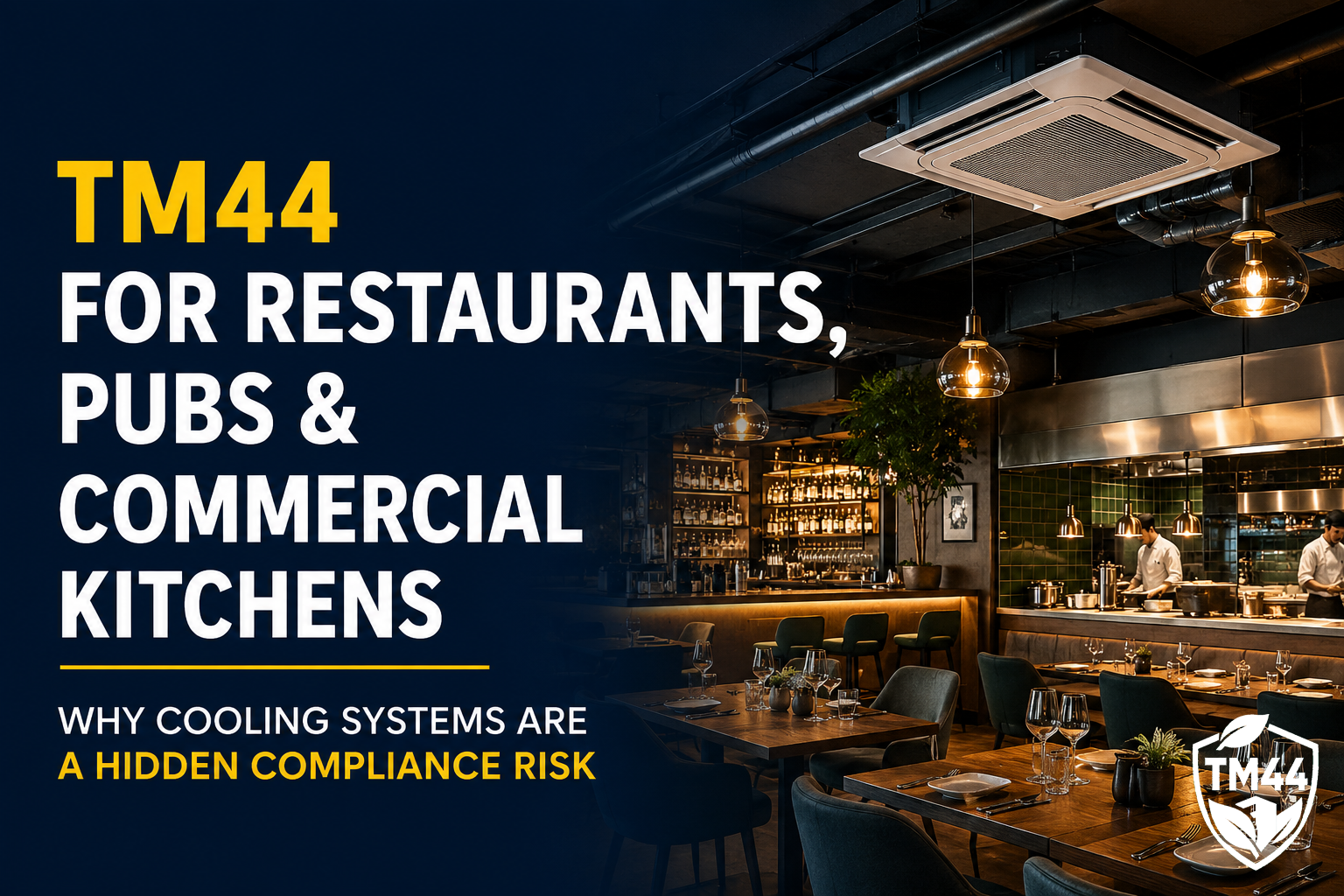
TM44 for Restaurants, Pubs and Commercial Kitchens: Why Cooling Systems Are a Hidden Compliance Risk”
May 19, 2026

Written by
TM44TeamAlfa
Most restaurant owners, pub operators and commercial kitchen managers only think about air conditioning when it starts causing problems.
The dining area becomes too warm during a busy lunch service.
The bar feels uncomfortable on a Friday night.
The cellar temperature starts drifting.
The kitchen becomes unbearable during peak service.
Customers complain during summer.
Staff keep changing the thermostat.
The energy bill rises, but nobody is completely sure why.
Then an air conditioning engineer is called. The system is serviced, filters may be cleaned, and the business carries on.
But there is another side to commercial air conditioning that many hospitality businesses still overlook: TM44 compliance.
If your restaurant, pub, bar, café, takeaway, hotel restaurant, food hall, nightclub, catering kitchen or commercial kitchen has air conditioning with a combined cooling capacity over 12kW, you may need a TM44 air conditioning inspection.
This is not the same as a normal maintenance visit. It is not the same as an F-Gas check. It is not simply paperwork for large office blocks.
A TM44 inspection is a legal air conditioning energy assessment for qualifying non-domestic buildings. It checks how efficiently your cooling system is operating, whether it is correctly controlled, whether proper maintenance evidence is available, and whether practical improvements could reduce wasted energy.
For hospitality premises, this matters because cooling systems are often built up gradually over time.
A typical restaurant, pub or commercial kitchen may have:
• dining area air conditioning
• bar and lounge cooling
• cellar cooling systems
• kitchen comfort cooling
• private dining room AC
• takeaway counter cooling
• café seating area cooling
• office air conditioning
• staff room cooling
• food preparation area cooling
• back-of-house split units
• ceiling cassette units
• wall-mounted AC units
• outdoor condensers hidden in yards, roofs or service areas
• older units added during refurbishments
• separate cooling systems installed by different contractors
One unit may not look significant. Several units together can easily push the premises over the 12kW TM44 threshold.
This is why cooling systems are a hidden compliance risk. They are visible every day, but the legal duty behind them is often invisible until a landlord asks for documents, a managing agent starts an audit, a lease event happens, an insurance request arrives, or someone asks whether the building has a valid TM44 report.
If you are unsure whether your premises qualifies, TM44.uk can help you check the position from unit photos, model numbers, an F-Gas register or an AC asset list. Before booking, it is worth reviewing the full TM44 inspection requirements in the UK at https://tm44.uk/tm44-inspection-requirements-uk/ so you understand when the 12kW threshold applies and what information may be needed.
Why Restaurants, Pubs and Kitchens Often Miss TM44 Compliance
Hospitality businesses already deal with a long list of compliance duties. Most operators naturally focus first on the risks that feel urgent and obvious.
These usually include:
• food hygiene
• fire safety
• gas safety
• electrical safety
• alcohol licensing
• insurance requirements
• staff training
• pest control
• waste management
• health and safety
• kitchen extraction cleaning
• emergency lighting
• PAT testing
• landlord compliance documents
• refrigeration servicing
• equipment maintenance
Air conditioning compliance often sits lower down the list because it feels like a technical building services issue. If the cooling works, many owners assume everything is fine.
That assumption can be expensive.
An air conditioning system can be serviced and still need a TM44 inspection. A restaurant can have an F-Gas register and still need a separate TM44 report. A pub can have maintenance records and still not have a valid government-lodged TM44 certificate.
This is where many hospitality businesses get caught out.
A maintenance engineer usually checks whether the system is working, whether filters need cleaning, whether faults are present and whether repairs are needed.
An F-Gas engineer focuses on refrigerant-related compliance and leak testing.
A TM44 assessor reviews the system from an energy performance and regulatory compliance perspective.
Those services are connected, but they are not the same.
If your restaurant, pub or commercial kitchen already has AC servicing or refrigerant records, it is still worth understanding how F-Gas leak testing and compliance checks differ from TM44 inspections. You can read more about F-Gas compliance at https://tm44.uk/f-gas-leak-testing-compliance-checks/
What Is a TM44 Inspection?
A TM44 inspection is an air conditioning energy assessment for qualifying non-domestic premises. It normally applies where the effective rated output of the air conditioning system is over 12kW.
The purpose is to assess the energy performance of the cooling system and provide recommendations. It is not only about producing a certificate. A properly completed TM44 report can help identify poor controls, unnecessary cooling, energy waste, missing maintenance evidence and system management issues.
During a TM44 inspection, an accredited assessor will usually review:
• the type of air conditioning system installed
• the number of indoor and outdoor units
• the estimated or confirmed cooling capacity
• system controls and operating settings
• cooling schedules and hours of use
• maintenance records
• F-Gas or AC asset information, if available
• accessibility of plant and equipment
• visible system condition
• whether the system appears suitable for the building
• whether heating and cooling may be working against each other
• practical energy efficiency recommendations
• report details needed for compliance and lodgement
For hospitality premises, this can be especially useful because different areas of the building have different cooling demands.
A restaurant dining area may need comfort cooling during lunch and dinner service.
A bar may need strong evening and weekend cooling.
A cellar may need stable cooling across longer periods.
A commercial kitchen may generate heat throughout preparation and service.
An office or staff room may only need occasional cooling.
If all of these systems are being used without clear controls, the business can waste energy every day without realising it.
For a full breakdown of the inspection process, report requirements and what happens during the visit, read the TM44 air conditioning inspections guide at https://tm44.uk/tm44-air-conditioning-inspections/
The 12kW Rule Explained for Hospitality Premises
The most important TM44 trigger is the 12kW cooling threshold.
A single large air conditioning system can exceed 12kW. However, many restaurants and pubs reach the threshold because multiple smaller systems are counted together.
Your premises may qualify if it has:
• three or four split systems across the restaurant and bar
• multiple ceiling cassette units across the dining space
• a VRF or VRV system serving different zones
• cellar cooling plus customer area comfort cooling
• air conditioning in the kitchen office and staff areas
• cooling added during separate refurbishments
• separate systems installed by different contractors
• a larger system serving both customer and back-of-house areas
This is where mistakes happen. A business owner may look at one indoor unit and assume the premises is below the threshold. The real question is the combined effective rated output of the relevant air conditioning system.
In practical terms, restaurants and pubs should collect the make and model numbers from all indoor and outdoor units. These details are usually found on the data plates. If labels are difficult to access, photos from a maintenance engineer or an asset register can help.
To make this easier, you can use the TM44 checker at https://tm44.uk/tm44-checker/ to confirm whether your restaurant, pub, bar, café or commercial kitchen is likely to need an inspection before requesting a quote.
If you do not know whether your system exceeds the threshold, do not guess. Send the unit details to TM44.uk and we can help review the position.
Why Commercial Kitchens Are Especially Vulnerable
Commercial kitchens create difficult cooling conditions. They produce heat, steam, grease, odours and high internal loads. Even when the customer area feels comfortable, the kitchen and back-of-house areas may be placing heavy pressure on cooling systems.
Common problems in commercial kitchens include:
• cooling systems running longer than necessary
• kitchen heat affecting nearby dining zones
• blocked filters caused by heavy use
• poor separation between kitchen and customer temperatures
• staff setting thermostats too low during service
• cooling used to compensate for poor ventilation
• outdoor condensers located in hot or restricted areas
• inconsistent maintenance records
• old systems working harder than they should
• no clear list of installed AC equipment
• controls being changed by multiple staff members
• cooling running after the kitchen has closed
A TM44 inspection does not replace proper kitchen extraction maintenance. It does not replace ventilation design. It does not replace routine AC servicing.
However, it can highlight where the air conditioning system is being used inefficiently, where controls need attention, and where maintenance evidence should be improved.
For a commercial kitchen, this can be valuable because energy costs are already high. If cooling is being wasted, the business may be paying every month for a problem that could be improved through better controls, clearer schedules, maintenance discipline or future system upgrades.
For businesses looking beyond basic compliance, the energy efficiency upgrade report after TM44 at https://tm44.uk/energy-efficiency-upgrade-report-post-tm44/ can help turn inspection recommendations into a clearer action plan.
Why Pubs, Bars and Nightclubs Should Take This Seriously
Pubs, bars and nightclubs are often overlooked in TM44 compliance because many operators think the rules only apply to large offices, shopping centres or corporate buildings.
That is not correct.
A pub, bar or nightclub can easily have enough cooling capacity to fall within the rules, especially where there is a large trading area, function room, cellar cooling, kitchen cooling, staff areas and separate office AC.
A typical pub or bar may have:
• bar area air conditioning
• lounge cooling
• function room AC
• cellar cooling
• kitchen cooling
• office AC
• staff room split unit
• nightclub or late-night trading area cooling
• multiple outdoor condensers
• separate systems installed at different times
The difficulty is that responsibility can be unclear. In some pubs, the tenant operates the business but the landlord owns the building. In other cases, a brewery, pub group, franchise operator or property company may manage the premises. Sometimes the AC contractor has records, but the business operator does not know whether a TM44 report exists.
This creates a compliance gap.
If there is uncertainty between landlord, tenant and managing agent responsibility, the TM44 compliance guide for businesses at https://tm44.uk/tm44-compliance-guide-for-businesse/ explains practical steps for getting the correct documents in place.
TM44 Is Not the Same as Air Conditioning Maintenance
One of the biggest misunderstandings in hospitality is the belief that regular AC servicing automatically covers TM44.
It does not.
Maintenance and TM44 are different.
Maintenance usually focuses on:
• cleaning filters
• checking operation
• identifying faults
• checking drains and condensate issues
• repairing damaged components
• reviewing basic performance
• keeping the system operational
• arranging parts or remedial works
TM44 focuses on:
• energy performance
• system efficiency
• control settings
• sizing and suitability
• maintenance evidence
• inspection recommendations
• compliance reporting
• government lodgement where required
• overall air conditioning energy assessment
Both services matter. Both support better building operation. But one does not automatically replace the other.
For example, a restaurant may have its air conditioning serviced twice per year. The units may work well. The customer area may be comfortable. But if the combined system is over 12kW and no valid TM44 inspection has been completed within the required period, the premises may still be missing a legal compliance requirement.
After the inspection, TM44.uk can support the TM44 certificate and government lodgement process at https://tm44.uk/tm44-certificate-government-lodgement/ so your report is correctly completed and lodged where required.
Hidden Energy Waste in Restaurants, Pubs and Commercial Kitchens
Hospitality premises often operate long hours. That means poor cooling control can become expensive very quickly.
In many cases, the issue is not one major fault. It is a combination of small inefficiencies repeated every day.
Typical examples include:
• dining areas cooled before staff arrive
• AC left running after closing
• cellar cooling operating with poor controls
• staff adjusting thermostats without guidance
• cooling set too low during quiet periods
• old units running inefficiently
• blocked filters reducing airflow
• doors left open while cooling is running
• heating and cooling active in nearby zones
• no clear responsibility for AC settings
• maintenance records spread across different contractors
• systems running harder because kitchens create excess heat
• private rooms cooled when not in use
• bar areas cooled outside trading hours
These issues may not stop the system from working, but they can increase energy costs.
A TM44 report can help identify where the business may be wasting energy and where simple changes could improve performance. That may include better time scheduling, improved control settings, clearer maintenance records, filter cleaning, equipment review or system upgrade recommendations.
For restaurants and pubs, these recommendations are not just technical. They can affect operating costs, customer comfort, staff working conditions and compliance confidence.
If energy bills are rising and the site has multiple cooling systems, a TM44 survey at https://tm44.uk/tm44-survey/ can be a sensible first step.
Case Study Example 1: Independent Restaurant With Multiple Split Systems
Consider a busy independent restaurant in London.
The owner believes the premises has only a few AC units. There are two ceiling cassette units in the dining area, one wall-mounted unit in a private dining room, one split system serving the bar area, and one small unit in the office.
The owner has a maintenance contractor and assumes the restaurant is covered.
During a review, the combined output appears likely to exceed 12kW. There is no previous TM44 report. Maintenance records are available, but nobody has explained the TM44 requirement to the operator.
A TM44 inspection is arranged. The assessor reviews the units, checks maintenance evidence, looks at control settings and identifies that several systems are being left on outside trading hours.
The recommendations include:
• setting clearer operating schedules
• reviewing thermostat settings
• improving maintenance record storage
• checking whether all zones need cooling at the same time
• training staff not to override controls unnecessarily
• reviewing older equipment during future replacement planning
The business gains a clearer compliance position and practical advice that may help reduce wasted cooling.
This is a common scenario. The restaurant is not deliberately avoiding compliance. The problem is that nobody had reviewed the total cooling capacity properly.
If you are in a similar position, request a TM44 inspection quote at https://tm44.uk/get-quote/ and include your unit count, property address and any available AC records.
Case Study Example 2: Pub With Cellar Cooling and Function Room AC
A pub operator runs a premises with a main bar, small kitchen, cellar and upstairs function room. The function room has its own air conditioning because it is used for events. The cellar has dedicated cooling. The bar has comfort cooling for summer trade.
The pub has several contractors involved in different areas. One contractor looks after refrigeration. Another attends the AC. The landlord handles some building matters. The tenant handles day-to-day operations.
No one is sure whether a TM44 report exists.
This is a classic hospitality compliance risk. The combined cooling system may exceed the threshold, but responsibility has become blurred.
A TM44 review helps establish:
• what equipment is installed
• whether the combined cooling output is likely to qualify
• who holds maintenance records
• whether a previous report exists
• whether a new inspection is required
• what information is needed before booking
The pub can then move from uncertainty to a clear action plan.
This is why hospitality operators should not wait until there is an audit or enforcement query. A quick check can prevent unnecessary stress later.
If your pub has been asked for compliance evidence urgently, the emergency TM44 24/48 hour service at https://tm44.uk/emergency-tm44-24-48-hour-service/ may be suitable where assessor availability allows.
Case Study Example 3: Commercial Kitchen in a Mixed-Use Building
A catering business operates from a commercial unit inside a mixed-use building. The kitchen has a heavy heat load during production hours. There is cooling in the office, preparation area and staff space. Some equipment is old, and the operator is unsure whether the landlord or tenant is responsible for compliance.
The business is asked by the managing agent to confirm whether the AC system has a valid TM44 report.
The operator does not have one.
TM44.uk reviews the available information and requests unit photos, model numbers and maintenance documents. Once the system details are clear, an inspection can be arranged if the threshold applies.
The report helps the operator understand the compliance position and provides recommendations for better system management.
In this type of case, the main value is clarity. The business owner does not need to become a TM44 expert. They simply need the right information, the right assessor and a properly handled report.
Case Study Example 4: Small Hospitality Group With Multiple Sites
A small hospitality group operates several restaurants across different cities. Each site has different AC systems because each building was fitted out at a different time.
One site has ceiling cassette units.
One site has split systems.
One site has cellar cooling and restaurant cooling.
One site has no clear AC asset list.
One site may have an old report, but nobody knows when it expires.
This is a common portfolio issue. The risk is not only one missing report. The real problem is lack of central control.
A portfolio review helps identify:
• which sites have qualifying systems
• which sites already have valid TM44 reports
• which reports may be expired
• which premises need inspections first
• which sites need better AC records
• which renewal dates should be tracked
• which locations require urgent action
If you operate several restaurants, pubs, bars or hospitality sites, the TM44 portfolio management service at https://tm44.uk/tm44-portfolio-management/ can help organise inspections, reports and renewal dates across multiple properties.
What Information Do You Need for a TM44 Quote?
To quote properly, a TM44 provider needs enough information to understand the size and complexity of the system.
For restaurants, pubs and commercial kitchens, the most useful information includes:
• site address
• business type
• number of indoor AC units
• number of outdoor condenser units
• make and model numbers
• cooling capacity in kW, if known
• photos of unit labels
• F-Gas register, if available
• AC maintenance asset list, if available
• previous TM44 report, if available
• access details
• parking information
• preferred inspection dates
• whether the premises is open during the day
• whether roof or plant access is required
• whether someone can escort the assessor on site
If you do not have everything, that does not mean you cannot start. TM44.uk can usually guide you on what is missing. In many cases, photos of labels and a basic unit count are enough to begin the quote review.
Once you have the unit count, photos, asset list or F-Gas register ready, you can request a fast TM44 inspection quote from our team at https://tm44.uk/get-quote/
To compare likely pricing before booking, you can also read the TM44 inspection cost in the UK guide at https://tm44.uk/tm44-inspection-cost-uk/
Who Is Responsible for TM44 in a Restaurant or Pub?
Responsibility can be straightforward when the business owner also owns the building and controls the air conditioning system.
It becomes more complicated when there is a lease, landlord, managing agent, brewery, franchise operator or multi-site property structure.
In hospitality, responsibility may involve:
• the commercial landlord
• the tenant
• the business operator
• the managing agent
• the facilities management company
• the pub group or brewery
• the franchise holder
• the freeholder
• the party responsible for maintaining the air conditioning system
The correct answer depends on the legal and practical control of the system. The lease may set out who is responsible for maintenance, compliance and statutory inspections. If the tenant controls and uses the system, they may need to be involved even where the landlord owns the plant.
The safest approach is not to assume. Check the lease, check who manages the AC maintenance contract, and confirm whether a valid TM44 report already exists.
Where the landlord, tenant or managing agent is unsure who should arrange the inspection, TM44.uk can help review the practical position and advise what information is needed before arranging an inspection.
How Often Is a TM44 Inspection Needed?
A qualifying air conditioning system normally requires a TM44 inspection at least every five years.
However, hospitality businesses should also pay attention to changes between inspections. If the system has been significantly altered, extended or replaced, the compliance position should be reviewed.
Examples include:
• new AC units added to a restaurant extension
• new cooling installed in a function room
• upgraded cellar cooling
• replacement of old split systems
• new VRF or VRV installation
• major refurbishment of the premises
• change of use from retail to restaurant
• change of tenant or operator
• missing previous report during lease handover
• expansion into a basement or upper floor
• new bar area or private dining space added
A five-year cycle sounds simple, but real hospitality premises change regularly. That is why it is worth keeping all AC records in one place and checking the position whenever works are carried out.
Why TM44 Matters Beyond Legal Compliance
TM44 compliance is not only about avoiding penalties. It can also support better building management.
For restaurants, pubs and commercial kitchens, this can mean:
• better understanding of installed AC systems
• improved energy control
• reduced unnecessary cooling
• better maintenance documentation
• stronger evidence for landlords or managing agents
• clearer compliance records
• better preparation for sale, lease or audit
• improved comfort for customers and staff
• better planning for future AC upgrades
• fewer surprises during property reviews
• stronger control across multi-site hospitality portfolios
• better evidence for internal compliance files
In a sector where operating costs are high, any insight into wasted energy matters. A TM44 report will not solve every issue, but it can show where the system may be poorly controlled, poorly documented or no longer suitable for the way the premises is used.
For operators with several sites, TM44 can also become part of a wider compliance process rather than a last-minute panic whenever a landlord or managing agent asks for documents.
How TM44.uk Helps Restaurants, Pubs and Commercial Kitchens
TM44.uk provides practical support for hospitality businesses that need a clear route from uncertainty to compliance.
For restaurants, pubs, bars and commercial kitchens, we can help with:
• checking whether your system is likely to exceed the 12kW threshold
• reviewing photos, model numbers or asset lists
• checking F-Gas registers where available
• confirming what information is needed before quoting
• arranging an accredited TM44 inspection
• supporting restaurants, pubs, bars and commercial kitchens across the UK
• helping with urgent inspection requests where available
• preparing the TM44 report
• supporting government lodgement where required
• advising on next steps after the report
• helping multi-site operators organise several inspections
Our process is designed to be simple because hospitality operators do not have time for unnecessary paperwork.
The process is straightforward:
• you send the details
• we check what is needed
• we provide a quote
• we arrange the inspection
• the assessor completes the site visit
• the report is prepared
• the certificate is lodged where required
• you receive a clearer compliance position
If you are ready to move forward, request a TM44 inspection quote at https://tm44.uk/get-quote/ and include your unit details, property address and any available asset list.
Signs Your Restaurant, Pub or Commercial Kitchen Should Check TM44 Now
You should check your TM44 position if any of the following applies:
• you have more than one AC unit on site
• you do not know the total cooling capacity
• you have a cellar cooling system plus comfort cooling
• your restaurant has ceiling cassette units
• your pub has a function room with AC
• your kitchen or staff areas have separate cooling
• you have no previous TM44 report
• your previous report may be over five years old
• your landlord or managing agent has asked for compliance documents
• you are selling, leasing or refinancing the premises
• you are preparing for an audit
• energy bills are high and cooling may be contributing
• AC systems have been added or replaced recently
• maintenance records exist but no TM44 certificate is available
• you operate several hospitality sites with no central AC compliance record
• your F-Gas register exists but no TM44 report can be found
If any of these apply, do not wait until the issue becomes urgent. A quick check now is usually easier than dealing with a last-minute compliance request.
Practical Checklist Before Booking
Before requesting a TM44 quote, try to collect the following:
• property address
• business name
• contact details
• number of indoor units
• number of outdoor units
• photos of data plates
• make and model numbers
• maintenance records
• F-Gas register
• previous TM44 report, if available
• details of roof or plant access
• opening hours
• parking or loading information
• preferred inspection dates
• site contact details
• access restrictions
• whether ladders, roof access or plant room access may be required
If you cannot access outdoor units safely, do not take risks. Tell the assessor what can and cannot be accessed. Roof access, plant rooms and restricted areas may need to be arranged in advance.
Final Thoughts
Restaurants, pubs and commercial kitchens are not always the first buildings people associate with TM44 inspections. But many hospitality premises have enough cooling capacity to fall within the rules, especially where multiple systems have been added over time.
The risk is not always obvious. The AC may work. The maintenance contractor may attend. The business may have F-Gas records. Customers may be comfortable. But the TM44 requirement may still be missing.
That is why this topic matters.
A TM44 inspection gives hospitality businesses a clearer compliance position, a better understanding of their cooling systems and practical recommendations for improving efficiency. For restaurants and pubs dealing with high energy costs, long operating hours and complex building systems, that can be valuable beyond the legal requirement.
If you run a restaurant, pub, bar, café, takeaway, commercial kitchen, hotel restaurant, food hall or hospitality premises and you are not sure whether your cooling system exceeds the 12kW threshold, start with the TM44 checker at https://tm44.uk/tm44-checker/, review the TM44 inspection cost in the UK at https://tm44.uk/tm44-inspection-cost-uk/, or request a TM44 inspection quote from our team at https://tm44.uk/get-quote/
TM44 Checker v9 Pro
Check TM44 compliance status in seconds
Search the official GOV data routes and public register fallback. If a record is missing or unclear, request a manual compliance review from TM44.uk.
Official data routesGOV fallbackCommercial buildings only
Case Studies & Success Stories Energy Efficiency & Cost Savings Guides & How-To Articles Industry News & Updates TM44 Compliance & Regulations
Related Posts
August 28, 2026